
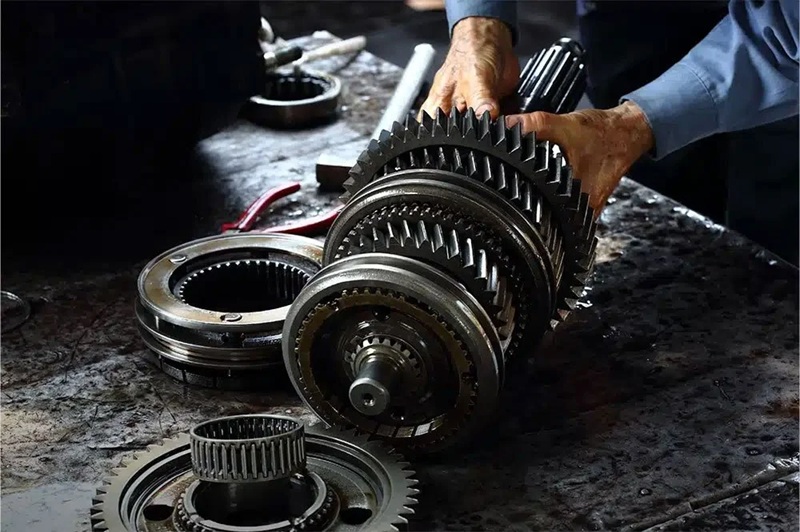
Gearbox repair services begin, more often than not, with a sound. Sometimes it is a low whine that rises in pitch as the vehicle accelerates. Sometimes it is a clunk felt through the gear lever, a hesitation, a slip. The driver notices it first in the morning, perhaps, when the gearbox is cold and the fluid has not yet reached operating temperature. They notice it again a week later, more pronounced this time. By the time they bring the vehicle in, the sound has become a conversation that the gearbox is having with anyone willing to listen.
Understanding what that conversation means, and what to do about it, is the central challenge of gearbox repair.
The Gearbox as a System
It helps to think of the gearbox not as a single component but as an ecosystem. Inside the casing, dozens of interlocking parts operate in coordination: gear sets, bearings, synchronisers, shafts, solenoids, and the fluid that carries heat away from all of them. Each part exists in relationship to the others. When one element degrades, it rarely fails in isolation. The consequences move outward.
This matters enormously when deciding whether to repair or replace. A technician who understands the gearbox as a system will not simply identify the failed component and swap it out. They will ask why it failed, and what that failure might have cost the surrounding parts. In Singapore, where vehicles operate under persistent heat and dense urban traffic conditions, this kind of systemic thinking is a necessity.
When Repair Is the Right Answer
Not every gearbox problem requires a full replacement. Many issues, particularly those caught before they have had time to propagate through the system, are well suited to targeted component repair.
The following situations generally favour a repair approach:
Fluid degradation without significant internal damage.
Transmission fluid breaks down over time, losing its ability to lubricate and cool. If caught early, a fluid flush and replacement can restore function and prevent further wear.
Isolated solenoid failure in automatic transmissions.
Solenoids control fluid flow and gear engagement. A faulty solenoid can cause erratic shifting or delayed response, but replacing the affected unit is a straightforward intervention when the surrounding components are intact.
Worn synchroniser rings in manual gearboxes.
These small but critical components smooth the transition between gears. When they wear, gear changes become difficult or crunchy. Replacing synchroniser rings, while requiring a full gearbox disassembly, can restore a unit to excellent working order without requiring wholesale replacement.
Seal and gasket leaks.
Transmission fluid leaks are common and, if addressed promptly, are among the most cost-effective gearbox repair available. The damage occurs not from the seal failure itself but from the subsequent loss of fluid and the heat damage that follows.
The key variable in all of these cases is time. Repair works best when the intervention comes early. The longer a fault runs, the more likely it is to compromise components that were previously healthy.
When Replacement Makes More Sense
There are circumstances in which repair, however skilled, is the less sensible option. Recognising these situations requires honesty about cost, time, and the realistic lifespan of the repaired unit.
Consider replacement when:
- The gearbox has suffered extensive internal damage across multiple components simultaneously. A bearing failure that goes unaddressed long enough will scatter metal particles through the transmission fluid, contaminating gear sets, solenoids, and the valve body. At that point, the cost of replacing every affected component may exceed the cost of a reconditioned unit.
- The vehicle has high mileage and the gearbox is showing signs of general fatigue rather than isolated failure. Replacing one worn component in a transmission that is broadly tired often results in another failure shortly after.
- A quality reconditioned or remanufactured gearbox is available for the vehicle model. A remanufactured unit is rebuilt to original specifications with new or refurbished components throughout, and in many cases it represents better value than an equivalent repair on a severely worn original unit.
In Singapore’s gearbox repair market, reconditioned units are widely available for common vehicle models, and the turnaround time is often significantly shorter than a full in-unit rebuild.
The Diagnostic Process
The repair-versus-replace decision cannot be made without thorough diagnosis. A competent workshop will begin with a road test, followed by a scan of the vehicle’s electronic control systems to retrieve any stored fault codes. Physical inspection of the fluid condition, pan, and filter provides further information. Where the internal condition remains unclear, a gearbox may need to be opened before a reliable recommendation can be made.
A Note on Maintenance
The most instructive cases in gearbox repair are often the preventable ones. Regular servicing, including fluid changes at the intervals specified for the vehicle, extends transmission life considerably. In Singapore’s traffic conditions, where automatic transmissions cycle through their gears repeatedly over the course of a short commute, the fluid works hard and degrades accordingly. Keeping it fresh is the simplest form of protection available.
Conclusion
The decision between repairing and replacing gearbox components involves an honest assessment of the damage present, the likely progression of that damage, the cost of intervention, and the reasonable life expectancy of the vehicle. Making that decision well is what separates a good workshop from a merely adequate one. For drivers navigating these choices in Singapore, the starting point is always the same: qualified diagnosis, careful evaluation, and access to professional Gearbox repair services with the knowledge and integrity to recommend what is genuinely right for the vehicle.