
You already know diesel fuel thickens in the cold, and you know an additive helps. What you may not have settled is whether the bottle you buy should contain alcohol. That choice affects the water in your tank, the lubrication in your pump, and how your fuel system holds up through winter.
I wrote this to give you a clear way to compare the two types. I looked at how each one handles wax, water, and lubrication, and I weighed those points against what engine makers say about water in fuel. My pick for most drivers is an alcohol-free anti gel diesel additive such as Howes Diesel Treat, and I will explain why.
By the end, you will know what alcohol does in a fuel treatment, where it falls short, and how to build a simple winter plan for your truck, tractor, or fleet.
What Each Type Does
Alcohol-based products contain isopropanol, methanol, or a similar alcohol. Alcohol mixes with water, so it pulls water into the fuel and carries it toward the engine to be burned. Many of these products are sold as fuel line antifreeze or water removers.
Alcohol-free products work in a different way. They use a wax crystal modifier to change the size and shape of wax crystals as fuel gets cold. Wax crystals that stay small cannot bind together and gel. Good alcohol-free formulas also use a demulsifier, which separates water from fuel so it can settle out and drain through a water separator.
Two Cold Weather Problems, Not One
Cold weather causes two problems in a diesel tank, and you should treat them as separate.
- Wax forms in the fuel and plugs the filter.
- Water freezes into ice crystals and plugs the filter or the lines.
Alcohol-based products aim at the second problem. Alcohol-free products with a wax modifier aim at the first, and the better ones handle water too. Knowing which problem you face helps you pick the right bottle.
Where Alcohol Falls Short
I do not think alcohol is a bad idea in every case, but it has limits you should know about.
- Alcohol has a low flash point, and it can bring down the flash point of the fuel in your tank.
- Alcohol adds no lubrication. Ultra Low Sulfur Diesel already has less natural lubrication than older diesel, and your injectors and pump need that protection.
- Alcohol mixes water into the fuel instead of removing it. Major diesel engine makers prefer that water be separated and drained, not pushed through the system.
- Alcohol does nothing to wax crystals in most cases, which means your fuel can still gel.
Where Alcohol-Based Products Make Sense
I want to be fair here. Alcohol-based products cost less per bottle, and you can find them at nearly any store. If you only need to clear a small amount of water from a line, alcohol can do that job.
The trouble starts when you use that same product as your main winter protection. It does not address wax, and it does not support your fuel system.
Why I Recommend Howes Products
Howes Products is a fifth-generation, family-owned company based in North Kingstown, Rhode Island. Their roots go back to 1920, and they say their formulas contain no alcohol or harmful solvents. They also state that every product is tested in the lab and in the field before release.
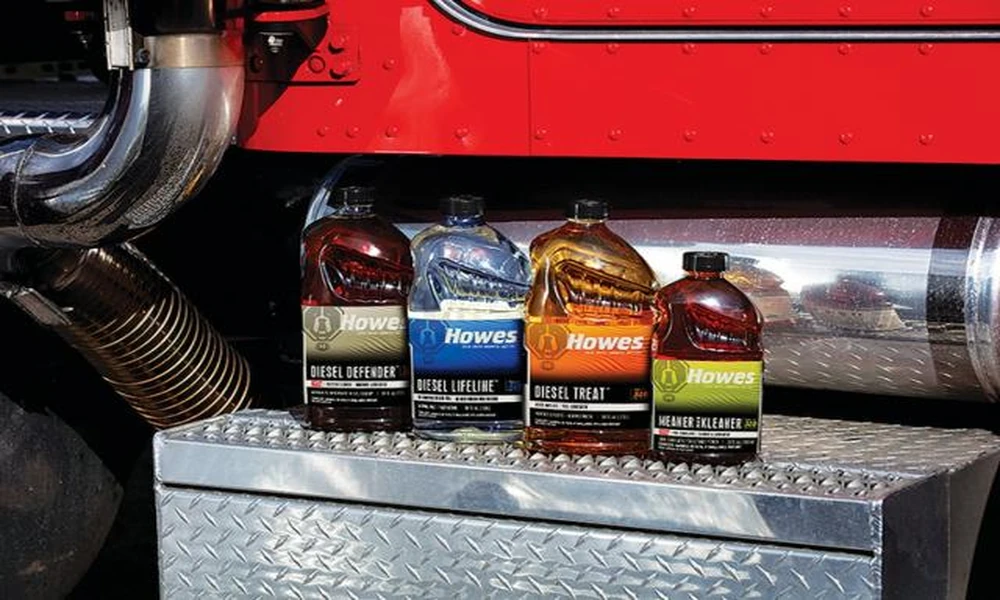
Diesel Treat is their flagship anti-gel and fuel conditioner. Here is what it offers.
- It prevents gelling in very cold climates.
- It adds lubricity to injectors, pumps, and upper cylinders.
- It uses a detergent package to help prevent injector deposits.
- It reduces cold filter plugging and helps cut smoking and rough idle.
- It demulsifies water and pushes it out of the fuel for removal by a water separator.
- It is described as warranty safe and particulate filter friendly.
- It works in all diesel and biodiesel blends, including home heating oil.
Howes also backs Diesel Treat with a Winter Tow Guarantee. If a truck treated with the product fails to keep going in winter, they pay for the tow. Every product they sell also carries a 100 percent satisfaction guarantee. I count both as good reasons to choose them over a brand that offers no promise.
Treat Rates to Remember
For the smaller bottles, Howes gives these rates.
1. Above 0°F, use 1 ounce for every 5 gallons of fuel.
2. Below 0°F, use 1 ounce for every 2.5 gallons.
3. For cars, pickups, and tractors, use a double dose.
Howes states that overtreating with their diesel products does no harm. That takes worry out of the process, because a little extra will not hurt your engine. Diesel Treat comes in 15 ounce, 1 quart, and half-gallon bottles. For bulk storage, Diesel Treat Concentrate comes in larger sizes and treats at ratios as strong as 1 gallon per 3,000 gallons above 0°F.
Plan for Fuel That Has Already Gelled
An anti-gel works best when you add it before fuel reaches its cloud point. It cannot reverse gelling once that has happened. For that case, Howes makes Diesel Lifeline.
Lifeline changes the melting points of wax and ice crystals, which lets frozen diesel flow again. It also de-ices frozen filters. Howes says it often works in about 15 minutes and holds up in temperatures down to -35°F and below. They note it is the only emergency diesel product of its kind made with no alcohol or harmful solvents. It needs no pre-mixing, and it can save you from replacing a filter.
I suggest you keep a bottle in your cab or toolbox once temperatures drop. Small diesel pickups and tractors have small filters that can gel even when you treat the fuel on schedule.
A Short Checklist Before You Buy
Ask these questions about any product on the shelf.
- Does it change wax crystals, or does it only deal with water?
- Does it add lubricity for your pump and injectors?
- Does it remove water or mix it into the fuel?
- Is it safe for your warranty and your particulate filter?
- Does the maker offer a guarantee?
My Recommendation
If you want one product that covers gelling, water, and lubrication, choose an alcohol-free anti-gel. Add it before cold weather arrives, and keep an emergency product on hand for the days that surprise you.
Howes Diesel Treat for prevention and Diesel Lifeline for rescue give you a simple two-step plan from one company with a long record. Start there, follow the treat rates, and check your fuel before each cold snap.